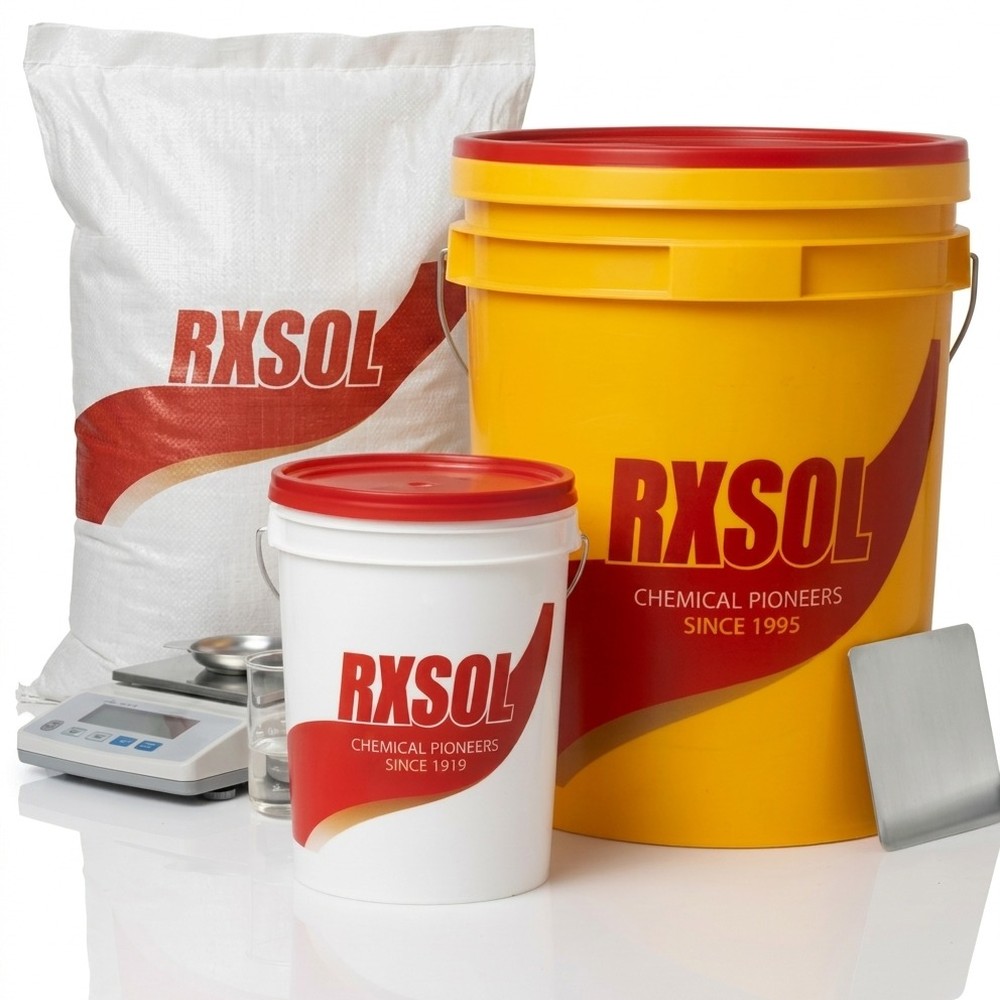
MULTIPLUS BWT 20 Ltrs

Sewage Chemicals Treatment-40

MULTIPLUS BWT 20 Ltrs

Part No. RXSOL-50-5011-020

Boiler Water Treatment chemical Liquid plus additive

Liquid Boiler water conditioner Blend of New generation polymer, phosphate, and alkalinity booster to control scale and corrosion in the boiler.

Key details

Part number RXSOL-50-5011-020
Generic name Boiler Water Treatment chemical Liquid plus additive
Active matter (%) 78%
Standard packing 20.00 Ltr.
Available pack sizes Blend of New generation polymer, phosphate, and alkalinity booster to control scale and corrosion in the boiler. Available in 25, 50, 210 Ltr
Supply locations RXSOL is the largest MULTIPLUS BWT manufacturer and supplier in Nairobi, Kenya, Uganda, Mumbai, Muscat Barka Oman, Fujairah, Abudhabi, Ajman, Sharjah, Dubai, Canada, Gujrat Gandhidham Surat, Kolkata Haldia, Chennai Ennore, Vizag Visakhapatnam Andhra Pradesh...

Need this product at your port or plant?

Enquire Now
Application

<p style="text-align: justify;">
MULTIPLUS BWT<span style="font-size: 10px;"><span style="font-family: verdana, geneva, sans-serif;"> is formulated to form a precipitate with calcium ions which will not adhere to metal surfaces but are in a form suitable for blowdown.</span></span><br />
<br />
Used for boilers and water softening.</p>
<p>
Formation of Calcium Sulfate is main cause for SCALE formation :::</p>
<p style="text-align: justify;">
The principal problem potential posed by sulfate ions in water is the possibility of calcium sulfate scale formation. Precipitation of calcium sulfate can occur when high concentrations of both calcium and sulfate exist simultaneously. There are three primary areas of water treatment in which calcium sulfate precipitation may occur boilers, cooling systems, and ion exchangers operating in the hydrogen or acid mode.</p>
<p style="text-align: justify;">
In boilers, calcium sulfate scale formation has been reduced to a minimum by modern treatment practices. The low hardness levels largely preclude calcium sulfate boiler scale. By contrast, cooling systems are subject to calcium sulfate scale deposition because the makeup is usually not treated for hardness removal. Cooling water is usually treated with sulfuric acid for pH control, and the makeup is cycled, i.e. concentrated.  Calcium sulfate scale deposition can  result unless the cycles of concentration are properly controlled in conjunction with the proper use of scale control chemicals.  Cation ion exchangers regenerated with sulfuric acid also can pose a major calcium sulfate problem. Calcium sulfate precipitation can be avoided by controlling the acid concentration and the flow rate through the exchanger.  </p>
<p style="text-align: justify;">
<a href="http://rxmarine.com/SULFATE-TEST-KIT">Sulfate content can be calculated in Laboratory by using this method</a> ::: http://rxmarine.com/SULFATE-TEST-KIT</p&gt;

Using Procedure

<p style="text-align: justify;">
<span style="font-family: verdana, geneva, sans-serif;">For optimum results dose </span>MULTIPLUS BWT <span style="font-family: verdana, geneva, sans-serif;">direct to the boiler via the bypass pot-feeder. It should be dissolved in hot water (50°C) at a ratio of 1 part Liquid to twenty parts condensate (e.g. 500 mL/10 litres). Ensure that treatment is fully dissolved before dosing.</span></p>
<p style="text-align: justify;">
<br />
<span style="font-family: verdana, geneva, sans-serif;">This  treatment dosed at 1.49 grams per ton of distilled water provides 1.0 ppm phosphate.<br />
<br />
Feed Points: Dose with other BOILER CHEMICAL/alkaline liquid by diluting withcondensate and feed directly into the system drum (below the water level) using a bypass pot feeder. For low-pressure boilers, It may be dosed to the hotwell or condensate return tank, although this is not the preferred method.</span><br />
 </p>
<p style="text-align: justify;">
<span style="font-family: verdana, geneva, sans-serif;"><strong>Dosage and control</strong></span></p>
<table border="1" cellpadding="0" style="width: 757.12px;" width="100%">
<tbody>
<tr>
<td style="text-align: justify;">
<span style="font-family: verdana, geneva, sans-serif;"> </span></td>
<td colspan="6">
<p style="text-align: justify;">
<span style="font-family: verdana, geneva, sans-serif;">Phophate test result in pPM PO4</span></p>
</td>
<td style="text-align: justify;">
<span style="font-family: verdana, geneva, sans-serif;"> </span></td>
</tr>
<tr>
<td>
<p style="text-align: justify;">
<span style="font-family: verdana, geneva, sans-serif;"> Pressure</span></p>
</td>
<td>
<p style="text-align: justify;">
<span style="font-family: verdana, geneva, sans-serif;"> 0 - 10</span></p>
</td>
<td>
<p style="text-align: justify;">
<span style="font-family: verdana, geneva, sans-serif;">10 - 20</span></p>
</td>
<td>
<p style="text-align: justify;">
<span style="font-family: verdana, geneva, sans-serif;">20 - 30</span></p>
</td>
<td>
<p style="text-align: justify;">
<span style="font-family: verdana, geneva, sans-serif;">30 - 40</span></p>
</td>
<td>
<p style="text-align: justify;">
<span style="font-family: verdana, geneva, sans-serif;">40 - 50</span></p>
</td>
<td>
<p style="text-align: justify;">
<span style="font-family: verdana, geneva, sans-serif;">> 50</span></p>
</td>
<td>
<p style="text-align: justify;">
<span style="font-family: verdana, geneva, sans-serif;"> <strong>Control range</strong></span></p>
</td>
</tr>
<tr>
<td>
<p style="text-align: justify;">
<span style="font-family: verdana, geneva, sans-serif;"> 0-40 Bar<br />
0-588 PSI</span></p>
</td>
<td>
<p style="text-align: justify;">
<span style="font-family: verdana, geneva, sans-serif;"> 23</span></p>
</td>
<td>
<p style="text-align: justify;">
<span style="font-family: verdana, geneva, sans-serif;">11.5 </span></p>
</td>
<td>
<p style="text-align: justify;">
<span style="font-family: verdana, geneva, sans-serif;">Satisfactory</span></p>
</td>
<td colspan="2">
<p style="text-align: justify;">
<span style="font-family: verdana, geneva, sans-serif;">Satisfactory</span></p>
</td>
<td>
<p style="text-align: justify;">
<span style="font-family: verdana, geneva, sans-serif;">Blow Down</span></p>
</td>
<td>
<p style="text-align: justify;">
<span style="font-family: verdana, geneva, sans-serif;"> <strong>20-50</strong></span></p>
</td>
</tr>
<tr>
<td>
<p style="text-align: justify;">
<span style="font-family: verdana, geneva, sans-serif;">41-60 Bar<br />
589-880 PSI </span></p>
</td>
<td>
<p style="text-align: justify;">
<span style="font-family: verdana, geneva, sans-serif;"> 17</span></p>
</td>
<td>
<p style="text-align: justify;">
<span style="font-family: verdana, geneva, sans-serif;"> 5.5</span></p>
</td>
<td>
<p style="text-align: justify;">
<span style="font-family: verdana, geneva, sans-serif;">Satisfactory</span></p>
</td>
<td colspan="2">
<p style="text-align: justify;">
<span style="font-family: verdana, geneva, sans-serif;">Blow Down</span></p>
</td>
<td>
<p style="text-align: justify;">
<span style="font-family: verdana, geneva, sans-serif;">Blow Down</span></p>
</td>
<td>
<p style="text-align: justify;">
<span style="font-family: verdana, geneva, sans-serif;">  <strong>15-30</strong></span></p>
</td>
</tr>
<tr>
<td>
<p style="text-align: justify;">
<span style="font-family: verdana, geneva, sans-serif;"> > 60 Bar<br />
> 880 PSI</span></p>
</td>
<td>
<p style="text-align: justify;">
<span style="font-family: verdana, geneva, sans-serif;"> 5.5</span></p>
</td>
<td>
<p style="text-align: justify;">
<span style="font-family: verdana, geneva, sans-serif;"> Satisfactory</span></p>
</td>
<td>
<p style="text-align: justify;">
<span style="font-family: verdana, geneva, sans-serif;">Satisfactory</span></p>
</td>
<td colspan="2">
<p style="text-align: justify;">
<span style="font-family: verdana, geneva, sans-serif;">Blow Down</span></p>
</td>
<td>
<p style="text-align: justify;">
<span style="font-family: verdana, geneva, sans-serif;">Blow Down</span></p>
</td>
<td>
<p style="text-align: justify;">
<span style="font-family: verdana, geneva, sans-serif;"><strong> 10-25</strong></span></p>
</td>
</tr>
</tbody>
</table>
<p style="text-align: justify;">
<span style="font-family: verdana, geneva, sans-serif;">Select row on righthand side for applicable pressure range. Compare test result with comment in table and dose stated amount of product per ton boiler water volume.</span></p>
<p style="text-align: justify;">
<span style="font-family: verdana, geneva, sans-serif;">These are recommended values based on experience and are in no way intended to replace the boiler manufacturer's specifications or company regulations.</span></p>

Technical Specifications

<p style="text-align: justify;">
<strong><span style="font-size: 10px;"><span style="font-family: verdana, geneva, sans-serif;">Sampling And Testing</span></span></strong><br />
<br />
<span style="font-size: 10px;"><span style="font-family: verdana, geneva, sans-serif;">A sample of boiler water should be drawn for analysis daily. The sample should always be taken from the same point after blow down, cooled and tested immediately. Fill the Boiler Water Log Form according to result. It is important that regular testing is carried out to ensure levels of treatment are correct.</span></span></p>
<p style="text-align: justify;">
<strong><span style="font-size: 10px;"><span style="font-family: verdana, geneva, sans-serif;">Physical Properties :</span></span></strong></p>
<p style="text-align: justify;">
<span style="font-size: 10px;"><span style="font-family: verdana, geneva, sans-serif;">Appearance        :Liquid<br />
Corrosive action  :None<br />
pH 1% solution   :8.8<br />
Flash point         :None</span></span></p>

Remarks

<p>
Phosphate/pH relationship recommended to control boiler corrosion. Different forms of phosphate consume or add caustic as the phosphate shifts to the proper form. For example, addition of monosodium phosphate consumes caustic as it reacts with caustic to form disodium phosphate in the boiler water according to the following reaction:</p>
<div id="cke_pastebin">
<table border="0" cellpadding="3" cellspacing="0">
<tbody>
<tr>
<td>
NaH2PO4</td>
<td>
+</td>
<td>
NaOH</td>
<td>
-></td>
<td>
Na2HPO4</td>
<td>
+</td>
<td>
H2O</td>
</tr>
<tr>
<td>
monosodium phosphate</td>
<td>
 </td>
<td>
sodium hydroxide</td>
<td>
 </td>
<td>
disodium phosphate</td>
<td>
 </td>
<td>
water</td>
</tr>
</tbody>
</table>
<p>
<br />
Conversely, addition of trisodium phosphate adds caustic, increasing boiler water pH:</p>
<table border="0" cellpadding="3" cellspacing="0">
<tbody>
<tr>
<td>
Na3PO4</td>
<td>
+</td>
<td>
H2O</td>
<td>
-></td>
<td>
Na2HPO4</td>
<td>
+</td>
<td>
NaOH</td>
</tr>
<tr>
<td>
trisodium phosphate</td>
<td>
 </td>
<td>
water</td>
<td>
 </td>
<td>
disodium phosphate</td>
<td>
 </td>
<td>
sodium hydroxide<br />
 </td>
</tr>
</tbody>
</table>
<p>
 </p>
</div>

Note

RXSOL MULTIPLUS BWT is  multi-functional boiler water Treatment formulated to be used in conjunction with RXSOL OXYTREAT  to provide a complete steam boiler with low hardness feed-water.

Packing : 20 Ltrs

Benefit and Features

  • Highly active phosphate based compound, economical in use.
  • Easily dissolved in water for dosing.
  • Scale problems due to calcium are eliminated.
  • Maintains sludge in a non-adherent state for ease of blow down.
  • Simple test to determine level of treatment.
  • Can be used for boilers of all pressures.
    RXSOL MULTIPLUS BWT does not influence the alkalinity in the system

RXSOL brand is well known name for MULTIPLUS BWT manufacturer, Exporter and supplier in Mumbai, Chennai, Kolkata, Vizag, Goa, Kochin, Manglore, Kandla, Gandhidham, Fujairah, Dubai, Sharjah, Uae, Gulf Middle East

Need MULTIPLUS BWT 20 Ltrs for your operation?

Our team helps with product selection, dosage, safety data and delivery worldwide.

Request a Quote