Antioxidant A 1076
Part No. RXSOL-81-8161-025
It is an effective, non-discoloring stabilizer that provides excellent long-term heat stability by preventing thermo-oxidative degradation during processing and service life.
Key Technical Details
| Part number | RXSOL-81-8161-025 |
|---|---|
| Standard packing | 25.00 |
| Available pack sizes | 25 Kgs |
| Supply locations | Antioxidant A 1076 manufacturer supplier distributor in Mumbai, Kandla, Kolkata, Vizag, Chennai, India, Fujairah, Dubai UAE, Muscat Oman, Kenya Africa. Get the best quality of Antioxidant A 1076 at a competitive price from us. We have ready stock of Antioxidant A 1076 in India, UAE Gulf, Oman, Kenya Africa. Contact us for bulk as well as small orders. |
Antioxidaint A 1076 is a primary antioxidant that can be applied in polyolefins, such as polyethylene, polypropylene, polybutene-1 and other polymers such as engineering plastics, styrene homo- and copolymers, polyurethanes, elastomers, adhesives, and other organic substrates. This high molecular weight phenolic antioxidant also provides excellent stabilization in other polymers such as styrenics, rubber modified styrenics including ABS, SAN and segmented block copolymers, saturated and unsaturated elastomers, PVC, urethane and acrylic coatings, adhesives and petroleum products.
Loading Instructions:
The loading data and results are based on laboratory work (and field-testing) under controlled conditions and do not necessarily indicate the result that the buyer or user will attain. For this reason we strongly recommend testing of your own system under the actual conditions of processing and end-use prior to full scale testing. The recommended loading concentrations of Antioxidant A 1076 in the polymers range between 500 ppm and 2000 ppm. In polyolefins the loading concentrations range between 0.1% and 0.4% depending on substrate, processing conditions, and long-term stability requirements. Concentration levels of Antioxidant A 1076 in hot melt adhesives range from 0.2% to 1%, and in synthetic tackifier resins, Antioxidant A 1076 concentrations range between 0.1% and 0.5%. Exact loading must be determined by compositions of the specific polymer system.
Appearance: White Crystalline powder
Molecular Weight: 530.9
Melting Range: 49 - 54°C
Color of Toluene Solution: 25 APHA Max.
Color of Fusion: 60 APHA Max.
Volatile Matter: 0.5%
Ash 0.1%
Solubility (10 g/100ml Toluene): Clear (25C)
% Transmittance: 425nm – 97% Min
500nm – 97% Min
Solubility: Solubility at 20 degree C (g/100ml solvent):
| Solvent | Solubility |
| Acetone | 26% |
| Benzene | 57% |
| Chloroform | 57% |
| Cyclohexane | 40% |
| Ethanol | 1.5% |
| Ethyl Acetate | 42% |
| n-Hexane | 31% |
| Methanol | 0.6% |
| Toluene | 50% |
| Water | 0.01% |
Packaging:
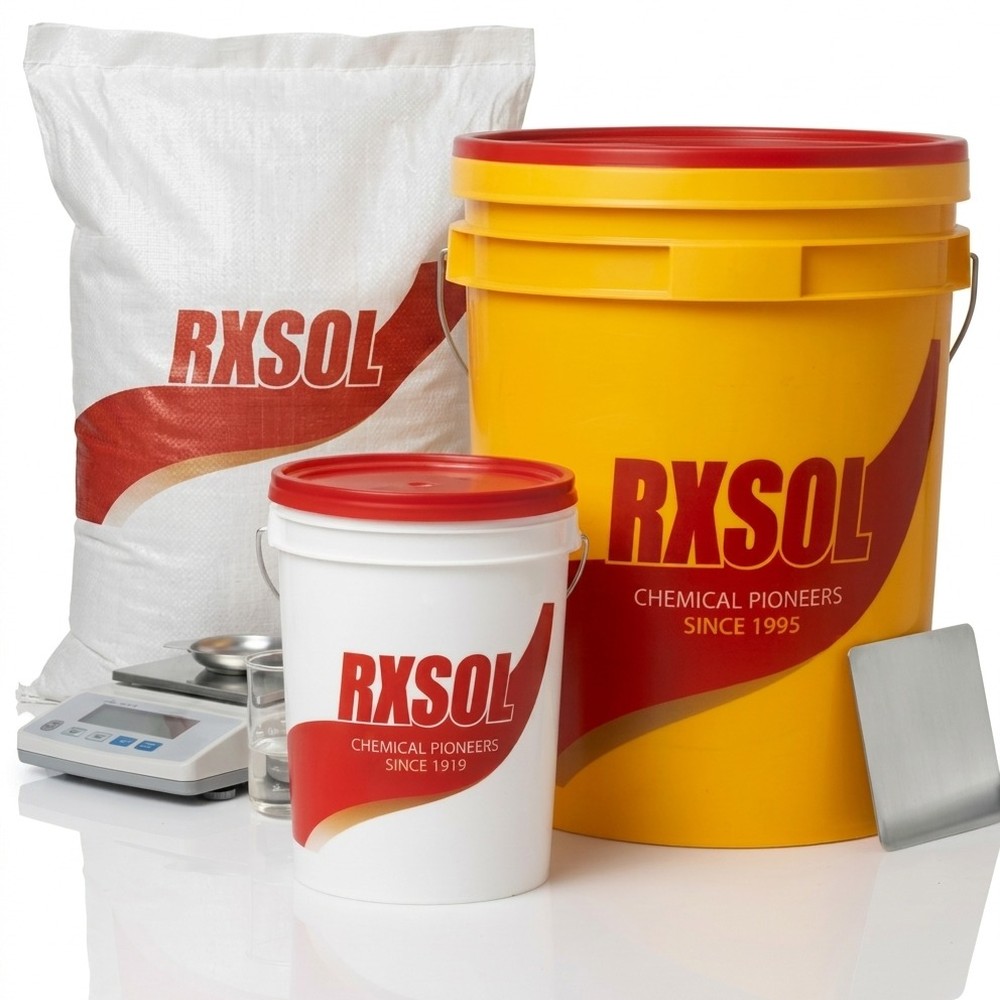
Antioxidant A 1076 is available in powder form in a 25 kg net weight, with an inner PE liner.
Storage:
This product may be stored up to two years in a sealed container. Containers should be stored in a cool, dry area. Extended storage at elevated temperatures or exposure to direct heat or sunlight could reduce product life. Keep containers sealed when not in use.
Toxicity & Safety:
This material is not intended for use in products for which prolonged contact with mucous membranes or abraded skin, or implantation within the human body is specially intended, unless the finished product has been tested in accordance with the Food and Drug Administration and/or other applicable safety testing requirements. Because of wide range of such potential uses, Rx Marine International is not able to recommend this material as safe and effective for such uses and assumes no liability for any such uses. Read and understand the Material Safety Data Sheet before using or handling this product.
FDA Regulations: Supplement
| Existing Regulations | Maximum Concentration | Thickness | Food Allowed | Temperatures Allowed |
| Antioxidant for polymers, | ||||
| Olefin copolymers complying with 177.1520 (c), excluding primarily non-crystalline copolymers described in items 3.4 and 3.5 | 0.25% | no restrictions | no restrictions | no restrictions |
| Olefin polymers complying with 177.1520 (c), item 3.4 | 0.25% | no restrictions | all foods for which polymer is approved | no restrictions |
| Olefin polymers complying with 177.1520 (c), item 3.5 | 0.25% | no restrictions | non-fatty foods | no restrictions |
| Adhesives complying with 175.105 | no restrictions | no restrictions | no restrictions | no restrictions |
| Semi-rigid and rigid acrylic and modified acrylic plastics complying with 177.1010 | 0.01% | no restrictions | no restrictions | no restrictions |
| Semi-rigid and rigid acrylic and modified acrylic plastics complying with 177.1010 | 0.2% | no restrictions | foods containing no more than 15% alcohol | no restrictions |
| Polystyrene and rubber-modified polystyrene complying with 177.1640 | 0.25% | no restrictions |
no restrictions except for fatty foods In fatty foods the finished rubber modified polystyrene polymers shall contain not less than 85 weight percent of total polymer units derived from styrene monome |
no restrictions |
| Acrylonitrile-butadiene-styrene copolymers (used in accordance with prior sanction or in compliance with 174-178 and 179.45) | 0.5% | no restrictions | no restrictions | no restrictions |
| Semi-rigid and rigid vinyl chloride plastics modified with methacrylate butadiene-styrene copolymers complying with 178.3790 | 0.05% | no restrictions | no restrictions | no restrictions |
| Rigid polyvinyl chloride 178.3790 | 0.2% | no restrictions | no restrictions | no restrictions |
| Polycarbonate resins complying with 177.1580 | 0.3% | no restrictions | no restrictions | room temperature or below fill and storage |
| Ethylene-vinyl acetate copolymers complying with 177.1350 | 0.1% | no restrictions | no restrictions | no restrictions |
| Nitrile rubber-modified acrylonitrile-methyl acrylate copolymers complying with 177.1480 | 0.2% | no restrictions | no restrictions |
150°F max. (as for polymer) |
| Styrene block polymers complying with 177.1810 | 0.3% | no restrictions | all foods for which polymer is allowed | 150°F max. |
| Vinylidene chloride homopolymers and/or vinylidene chloride copolymers complying with regulations in Parts 175, 176, 177, 179, and 181. The vinylidene chloride copolymers shall contain not less than 50% of total polymer units derived from vinylidene chloride | 0.2% | no restrictions | no restrictions | no restrictions |
| Chlorinated isobutylene isoprene complying with 177.1420 (a) (3) | 0.025% | no restrictions | no restrictions | no restrictions |
| Rubber articles complying with 177.2600 | 0.5% | no restrictions | no restrictions | no restrictions |
Advantages:
Highly compatible with a wide range of organic substrates
Easily incorporated by melting techniques due to its low melting point
Non-staining and non-discoloring
Excellent resistance to extraction
Odorless and tasteless
Improvement of long-term stability
Low volatility
Extensive FDA clearances
Ease of compatibility with other stabilizers
Need Antioxidant A 1076 for your operation?
Our team helps with product selection, dosage, safety data and delivery worldwide.
Request a Quote