Enviro Guard Sulfite
Part No. RXSOL-23-1305-026
Removal of chlorine, After 25 seconds of contact, catalyzed sodium sulfite removed the chlorine content in a Ballast Water Treatment System. Most commonly used to reduce the residual chlorine
Key Technical Details
| Part number | RXSOL-23-1305-026 |
|---|---|
| Standard packing | 50.00 |
| Supply locations | Neutralizer for Ballast Water Management System Enviro Guard Sulfite manufacturer and supplier in Mumbai, Kandla, Kolkata, Chennai, Visakhapatnam, Haldia, Paradip, Gandhidham, Hazira Surat, Muscat Oman, Barka, Ruwi, Ghala, Fujairah, Ajman, Abudhabi, Dubai, Sharjah, UAE, Nairobi Kenya, Sudan, Yemen, Canada |
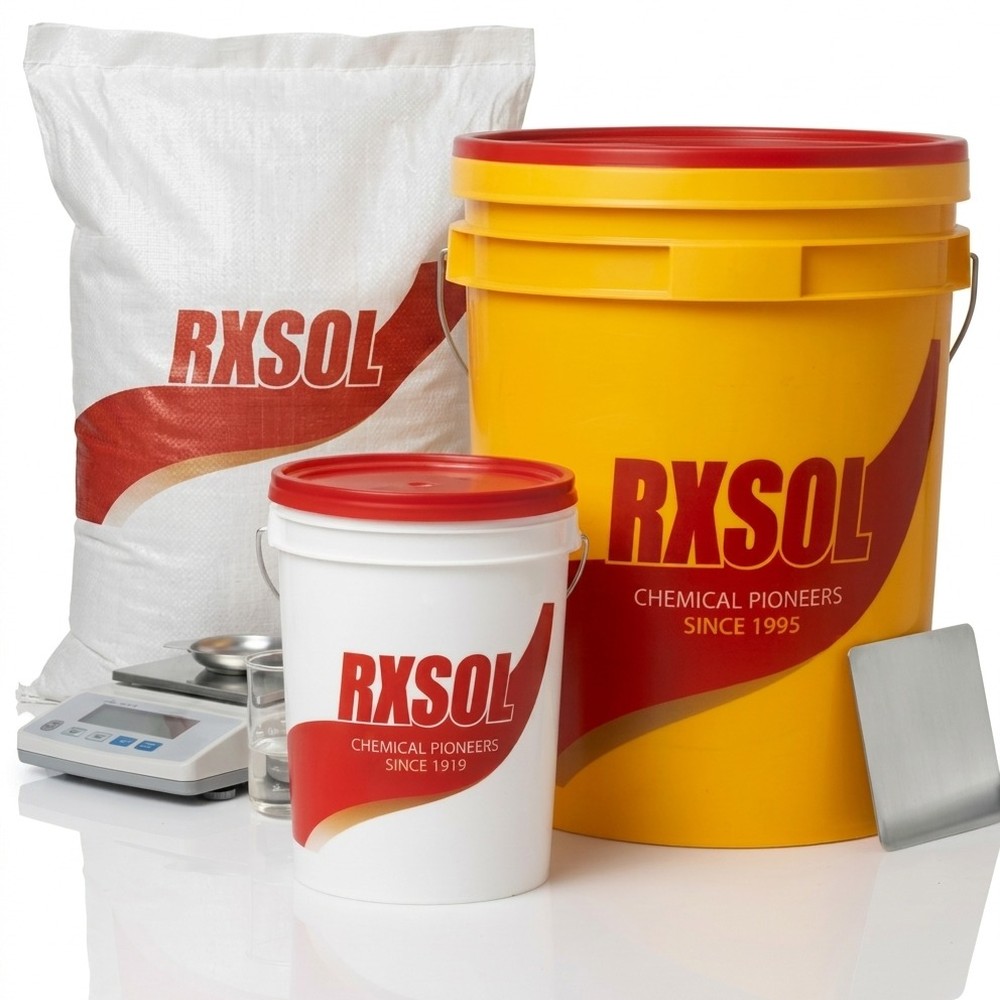
Enviro Guard Sulfite is a white granular material.
White, free flowing crystalline Odorless powder
Oxygen Control
Chemical Oxygen Scavengers. The oxygen scavengers most commonly used in boiler systems are sodium sulfite, sodium bisulfite, hydrazine, catalyzed versions of the sulfites and hydrazine, and organic oxygen scavengers, such as hydroquinone and ascorbate.
It is of critical importance to select and properly use the best chemical oxygen scavenger for a given system. Major factors that determine the best oxygen scavenger for a particular application include reaction speed, residence time in the system, operating temperature and pressure, and feedwater pH. Interferences with the scavenger/oxygen reaction, decomposition products, and reactions with metals in the system are also important factors. Other contributing factors include the use of feedwater for attemperation, the presence of economizers in the system, and the end use of the steam. Chemical oxygen scavengers should be fed to allow ample time for the scavenger/oxygen reaction to occur. The deaerator storage system and the feedwater storage tank are commonly used feed points.
In boilers operating below 1,000 psig, sodium sulfite and a concentrated liquid solution of catalyzed sodium bisulfite are the most commonly used materials for chemical deaeration due to low cost and ease of handling and testing. The oxygen scavenging property of sodium sulfite is illustrated by the following reaction:
| 2Na2SO3 | + | O2 | ® | 2Na2SO4 |
| sodium Sulfite | oxygen | sodium sulfate |
Theoretically, 7.88 ppm of chemically pure sodium sulfite is required to remove 1.0 ppm of dissolved oxygen. However, due to the use of technical grades of sodium sulfite, combined with handling and blowdown losses during normal plant operation, approximately 10 lb of sodium sulfite per pound of oxygen is usually required. The concentration of excess sulfite maintained in the feedwater or boiler water also affects the sulfite requirement.
Sodium sulfite must be fed continuously for maximum oxygen removal. Usually, the most suitable point of application is the drop leg between the deaerator and the storage compartment. Where hot process softeners are followed by hot zeolite units, an additional feed is recommended at the filter effluent of the hot process units (prior to the zeolite softeners) to protect the ion exchange resin and softener shells.
As with any oxygen scavenging reaction, many factors affect the speed of the sulfite-oxygen reaction. These factors include temperature, pH, initial concentration of oxygen scavenger, initial concentration of dissolved oxygen, and catalytic or inhibiting effects. The most important factor is temperature. As temperature increases, reaction time decreases; in general, every 18°F increase in temperature doubles reaction speed. At temperatures of 212°F and above, the reaction is rapid. Overfeed of sodium sulfite also increases reaction rate. The reaction proceeds most rapidly at pH values in the range of 8.5-10.0.
The following operational conditions necessitate the use of catalyzed sodium sulfite:
- low feedwater temperature
- incomplete mechanical deaeration
- rapid reaction required to prevent pitting in the system
- short residence time
- use of economizers
High feedwater sulfite residuals and pH values above 8.5 should be maintained in the feedwater to help protect the economizer from oxygen attack.
Some natural waters contain materials that can inhibit the oxygen/sulfite reaction. For example, trace organic materials in a surface supply used for makeup water can reduce speed of scavenger/oxygen reaction time. The same problem can occur where contaminated condensate is used as a portion of the boiler feedwater. The organic materials complex metals (natural or formulated catalysts) and prevent them from increasing the rate of reaction.
Sodium sulfite must be fed where it will not contaminate feedwater to be used for attemporation or desuperheating. This prevents the addition of solids to the steam.
At operating pressures of 1,000 psig and higher, hydrazine or organic oxygen scavengers are normally used in place of sulfite. In these applications, the increased dissolved solids contributed by sodium sulfate (the product of the sodium sulfite-oxygen reaction) can become a significant problem. Also, sulfite decomposes in high-pressure boilers to form sulfur dioxide (SO2) and hydrogen sulfide (H2S). Both of these gases can cause corrosion in the return condensate system and have been reported to contribute to stress corrosion cracking in turbines. Hydrazine has been used for years as an oxygen scavenger in high-pressure systems and other systems in which sulfite materials cannot be used. Hydrazine is a reducing agent that removes dissolved oxygen by the following reaction:
| N2H4 | + | O2 | ® | 2H2O | + | N2 |
| hydrazine | oxygen | water | nitrogen |
Because the products of this reaction are water and nitrogen, the reaction adds no solids to the boiler water. The decomposition products of hydrazine are ammonia and nitrogen. Decomposition begins at approximately 400°F and is rapid at 600°F. The alkaline ammonia does not attack steel. However, if enough ammonia and oxygen are present together, copper alloy corrosion increases. Close control of the hydrazine feed rate can limit the concentration of ammonia in the steam and minimize the danger of attack on copper-bearing alloys. The ammonia also neutralizes carbon dioxide and reduces the return line corrosion caused by carbon dioxide.
Hydrazine is a toxic material and must be handled with extreme care. Because the material is a suspected carcinogen, federally published guidelines must be followed for handling and reporting. Because pure hydrazine has a low flash point, a 35% solution with a flash point of greater than 200°F is usually used. Theoretically, 1.0 ppm of hydrazine is required to react with 1.0 ppm of dissolved oxygen. However, in practice 1.5-2.0 parts of hydrazine are required per part of oxygen.
The factors that influence the reaction time of sodium sulfite also apply to other oxygen scavengers. Rate of reaction as a function of temperature and hydrazine concentration. The reaction is also dependent upon pH (the optimum pH range is 9.0-10.0)
The use of untreated water in a boiler can cause scale buildup and corrosion. Treating the boiler water with chemicals - known as boiler feed water treatment - will increase the life of the boiler and reduce maintenance costs. Scale is formed from calcium and magnesium salts that are carried in solution in the water used in the boiler. Treatment of the boiler water by raising the pH with the addition of alkaline salts – such as sodium or potassium hydroxide – will prohibit most of the calcium and magnesium salts from precipitating and causing scale buildup in the boiler. Sodium sulfite is a constituent of some boiler feed water treatments. This constituent acts as an oxygen scavenger. The presence of oxygen in boiler water will lead to corrosion of the boiler . A chelating agent, sodium hexametaphosphate is sometimes added to boiler water to inhibit hard water salts from precipitating to form scale. Hydrochloric acid is sometimes utilized in acid boils to remove scale form the boiler.
Need Enviro Guard Sulfite for your operation?
Our team helps with product selection, dosage, safety data and delivery worldwide.
Request a Quote